
Ever wonder why you can sprint for only a few... Δες περισσότερα
 LCPE6 προβολές·Ενημερώθηκε Jun 8, 2026·5 σελίδες
Introduction to the Body's Energy Systems
1 / 5
1
of 5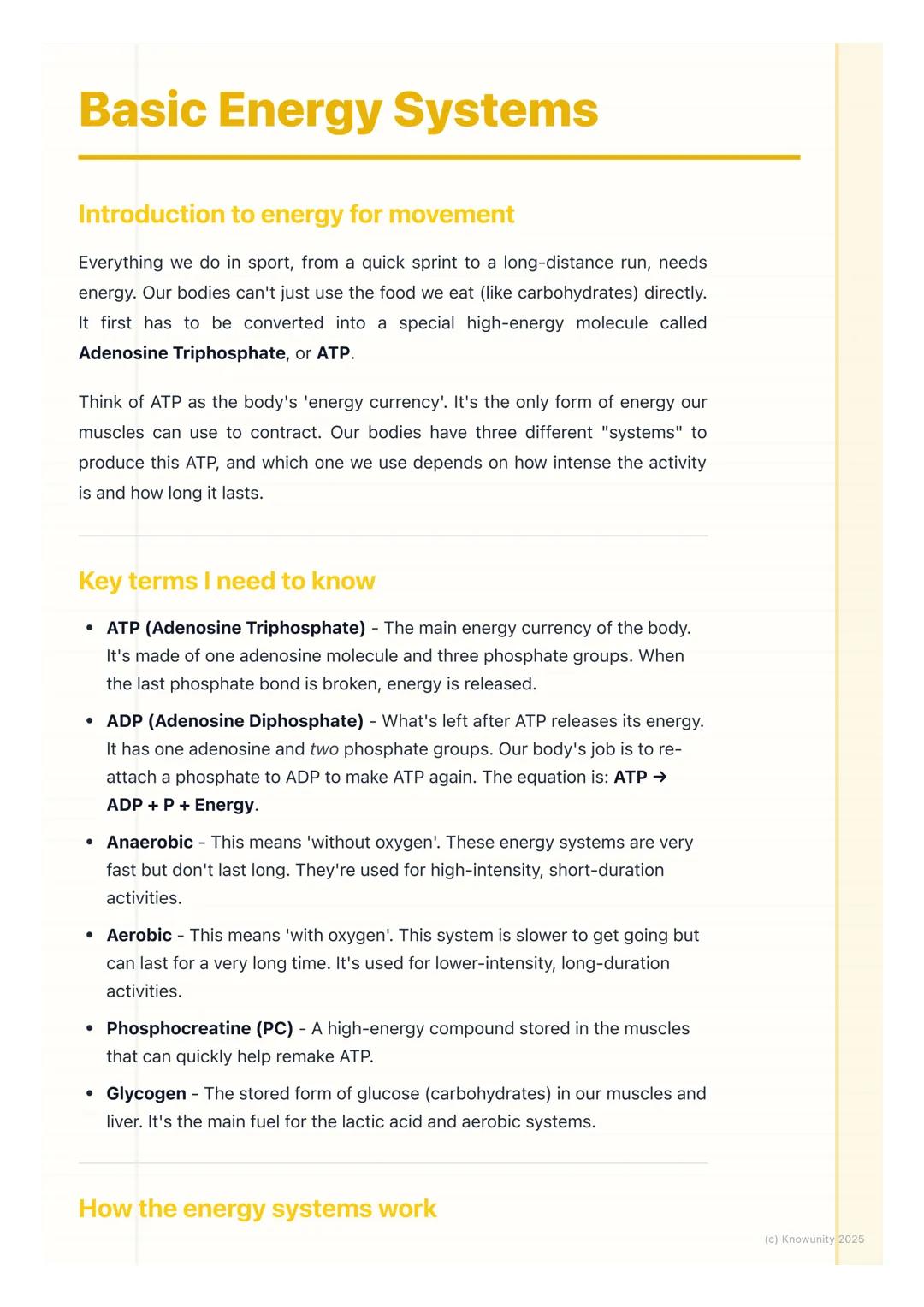
Basic Energy Systems
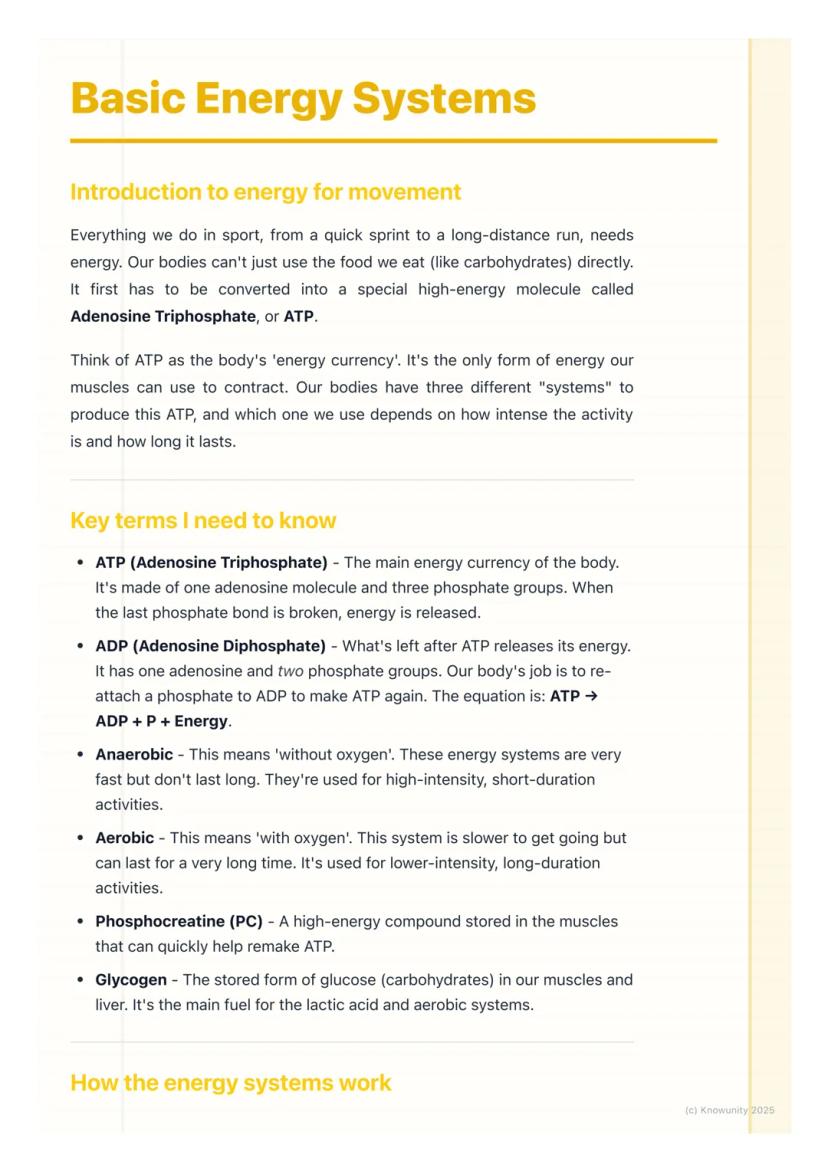
Your muscles are basically really picky eaters - they can only use one type of fuel called ATP (Adenosine Triphosphate). Think of ATP as your body's energy currency, like coins in an arcade machine.
Here's the thing though: your body only stores enough ATP for about 2-3 seconds of movement. After that, it needs to quickly make more using three different systems. The cool part is that these systems work together on what's called the energy continuum - it's not like flicking a switch, but more like a sliding scale where one system takes the lead.
The key difference between these systems is whether they need oxygen (aerobic) or can work without oxygen (anaerobic). Anaerobic systems are lightning fast but burn out quickly, whilst aerobic systems are like marathon runners - slower to start but can keep going for hours.
Quick Tip: Remember the equation ATP → ADP + P + Energy. Your body's job is constantly sticking that phosphate back on to remake ATP!
2
of 5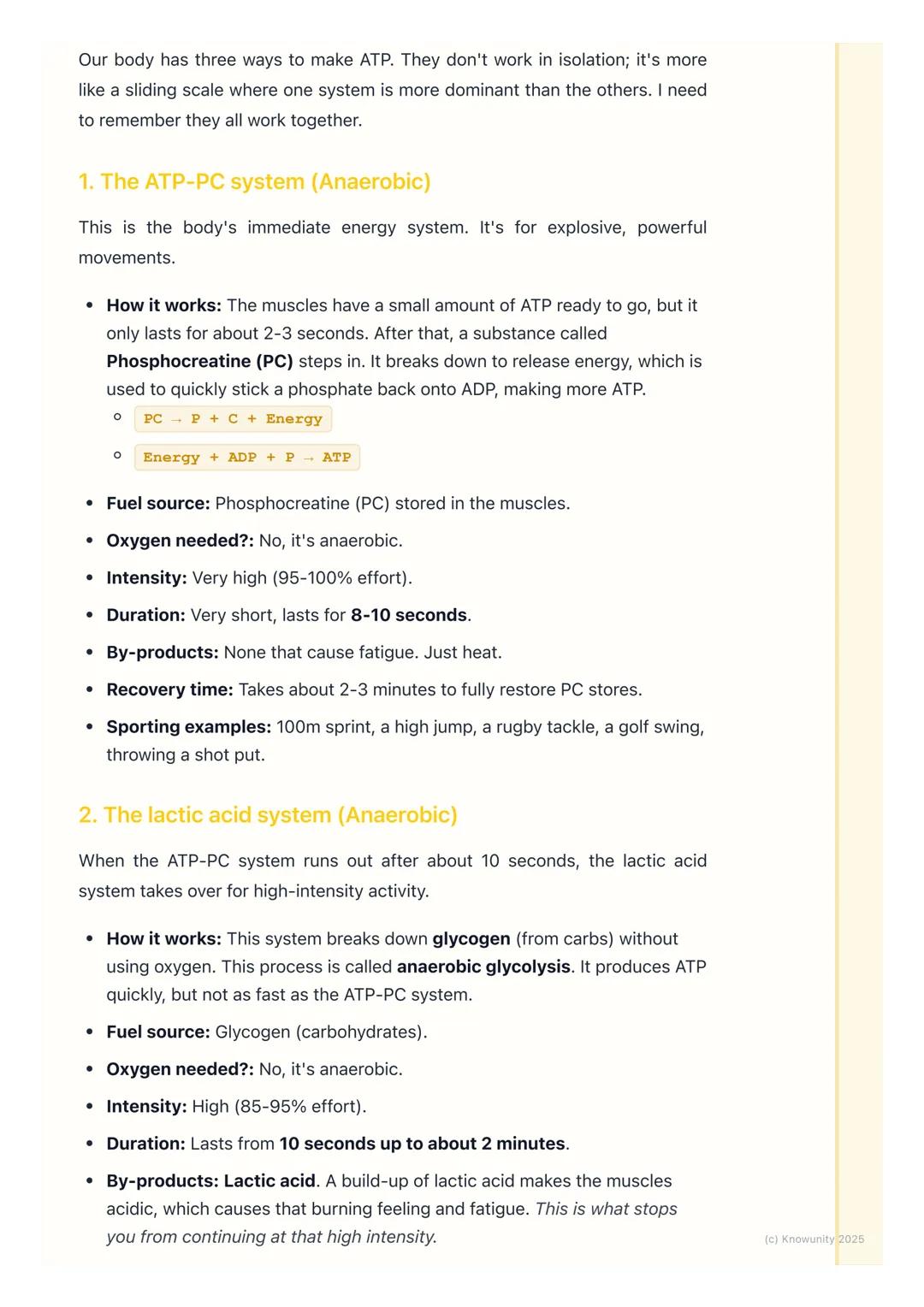
The Three Energy Systems
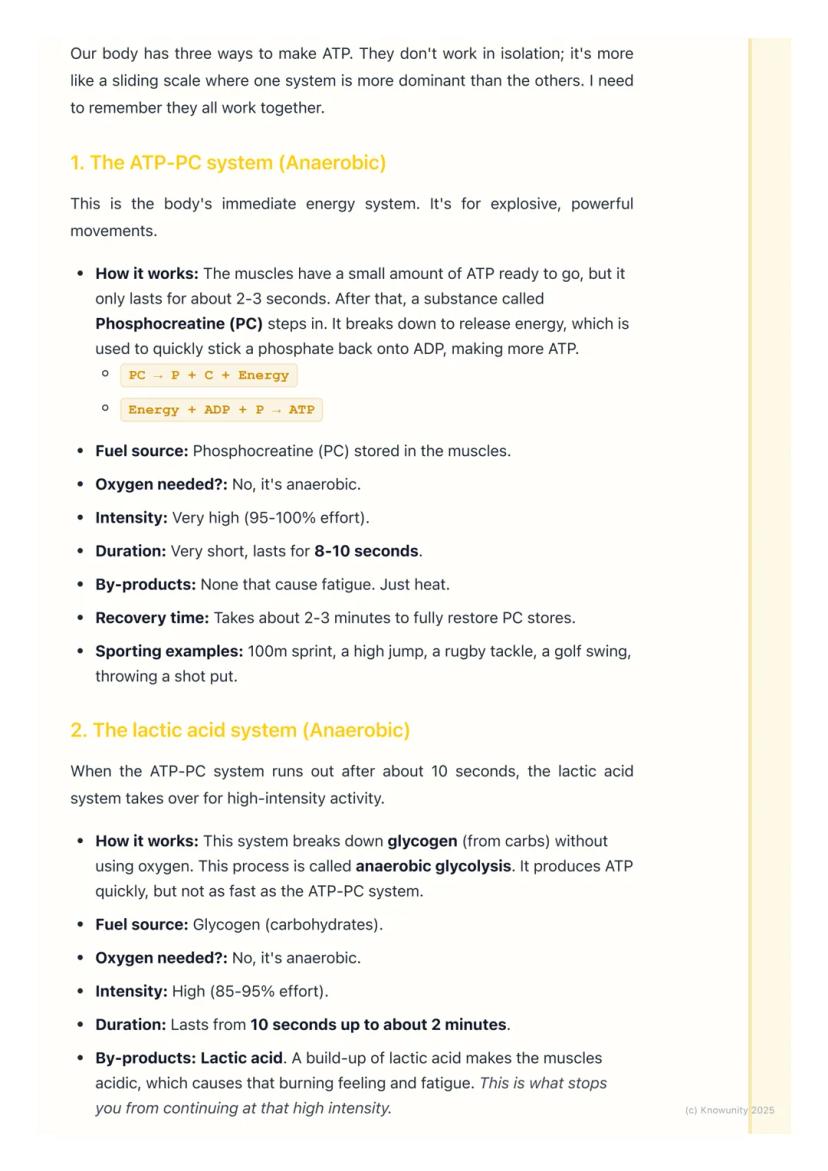
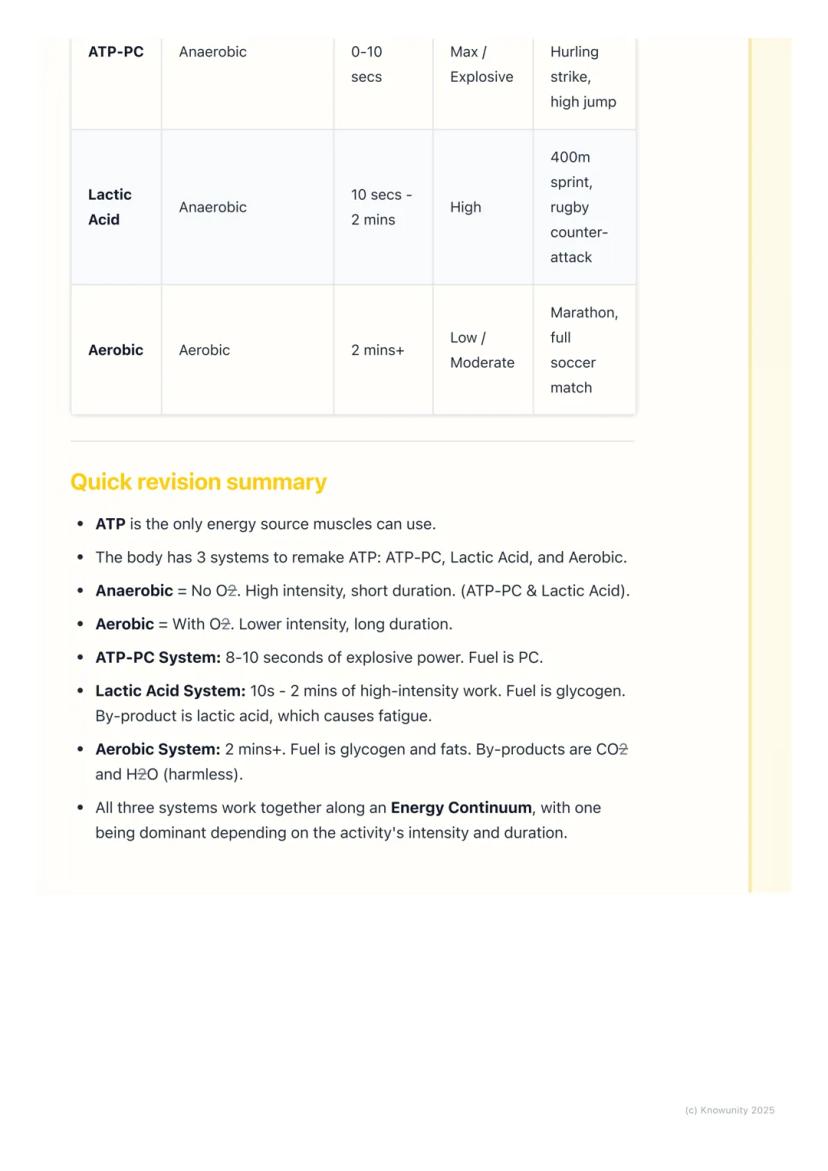
The ATP-PC System is your body's emergency energy supply. It's pure explosive power for about 8-10 seconds using phosphocreatine (PC) stored in your muscles. Think 100m sprint start or a rugby tackle - maximum effort, no oxygen needed, no nasty side effects.
The Lactic Acid System takes over when you're still going hard after 10 seconds. It breaks down glycogen (stored carbs) without oxygen, but here's the catch - it produces lactic acid that makes your muscles burn and forces you to slow down after about 2 minutes.
The Aerobic System is your endurance powerhouse. It uses oxygen to efficiently burn glycogen and fats, producing only harmless water and carbon dioxide. This system can literally keep you going for hours, but it can't produce energy fast enough for high-intensity work.
Remember: These systems don't work in isolation - they're all contributing at the same time, with one being dominant depending on what you're doing.
3
of 5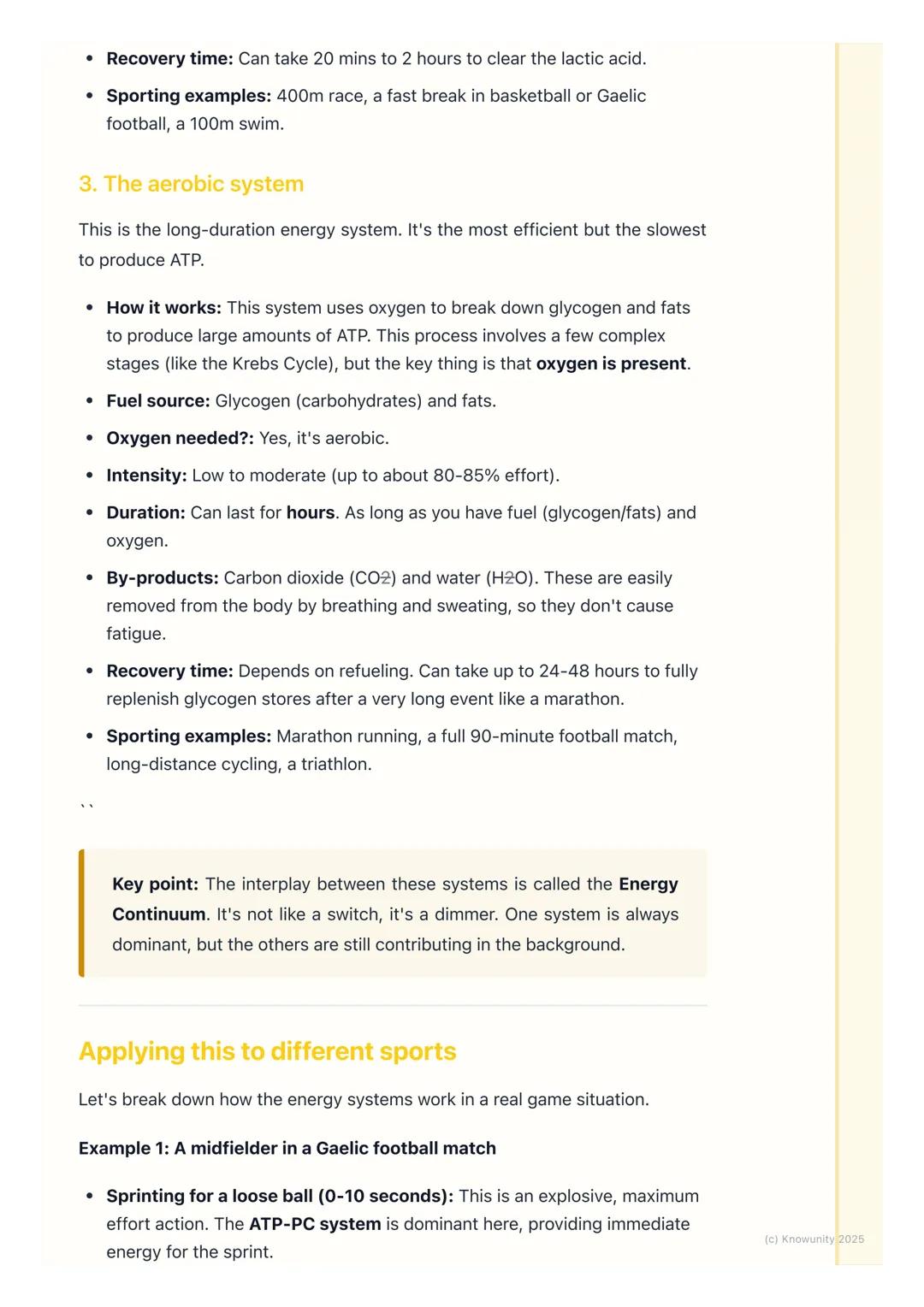
Real Sport Applications
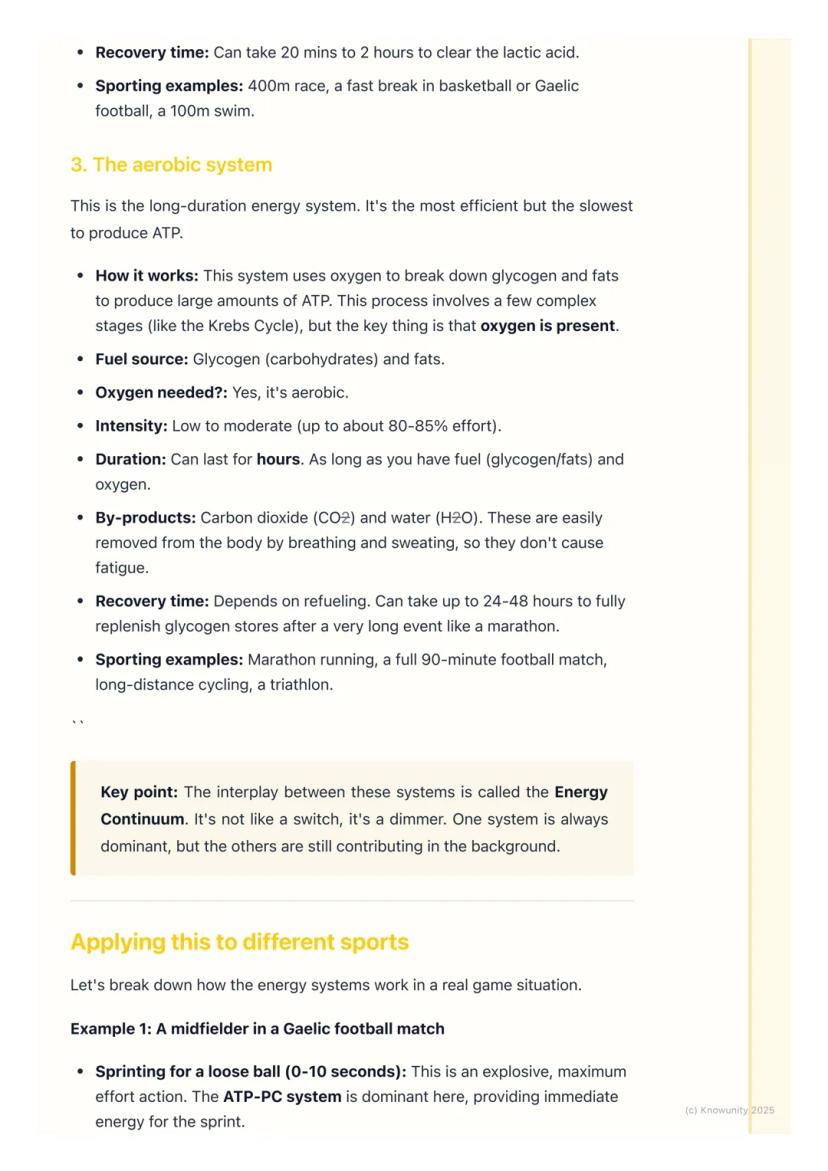
Let's look at a Gaelic football midfielder during a match. When they sprint for a loose ball , the ATP-PC system dominates, giving that explosive burst. During a gut-busting run up the pitch , the lactic acid system takes over - that's why their legs start burning.
For the rest of the 70-minute match, the aerobic system is doing most of the work during jogging and recovery periods. It's also busy helping to clear lactic acid and restock the anaerobic systems during breaks in play.
A 400m sprinter is the perfect example of lactic acid system dominance. The first 50m uses ATP-PC for that explosive start, then lactic acid takes over for the brutal middle section. By the final 100m, lactic acid buildup is causing that wall of pain every 400m runner knows too well.
Exam Gold: Never say the systems work "one at a time" - always mention the dominant system and how they work together on the energy continuum.
4
of 5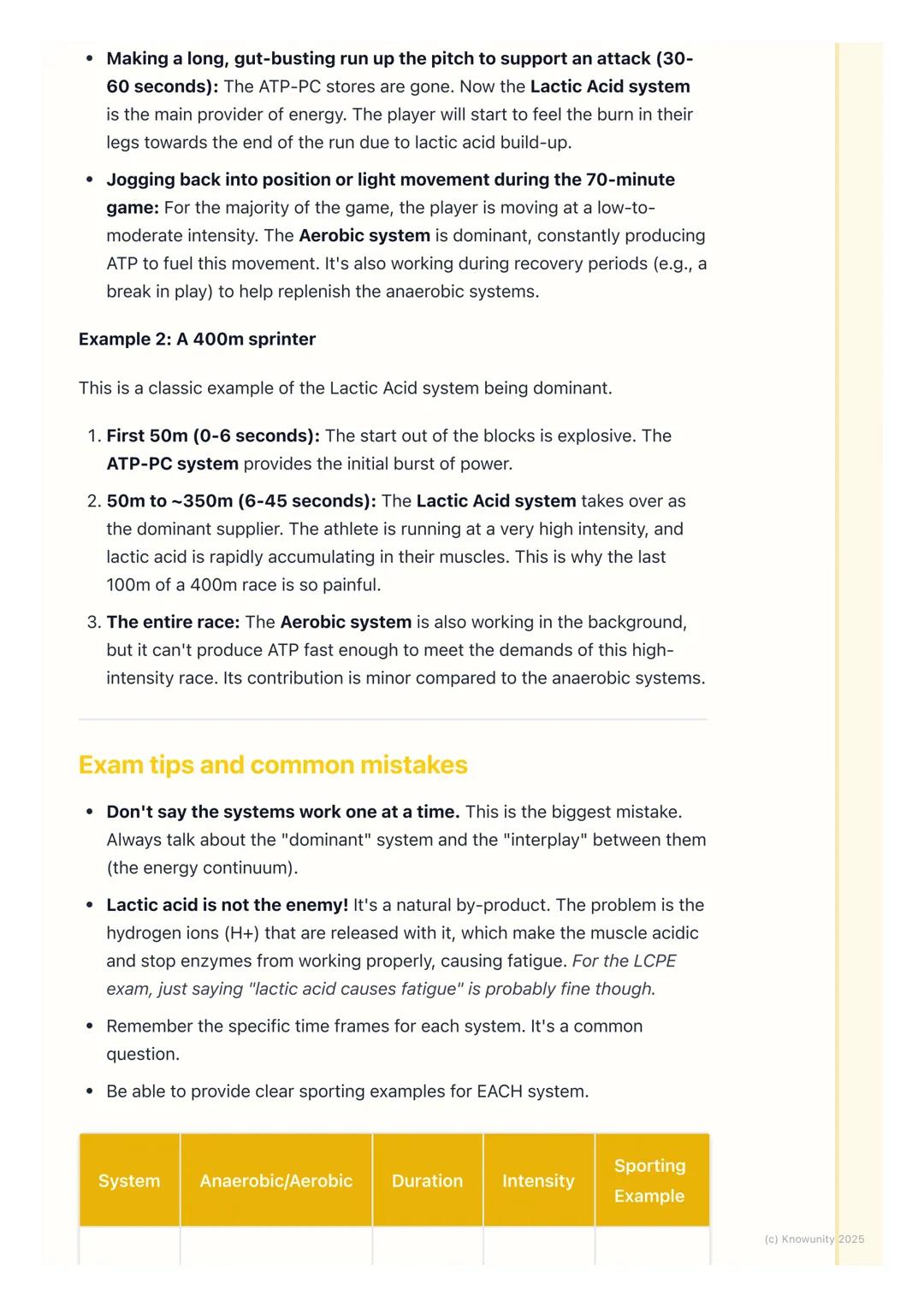
Key Details and Exam Tips
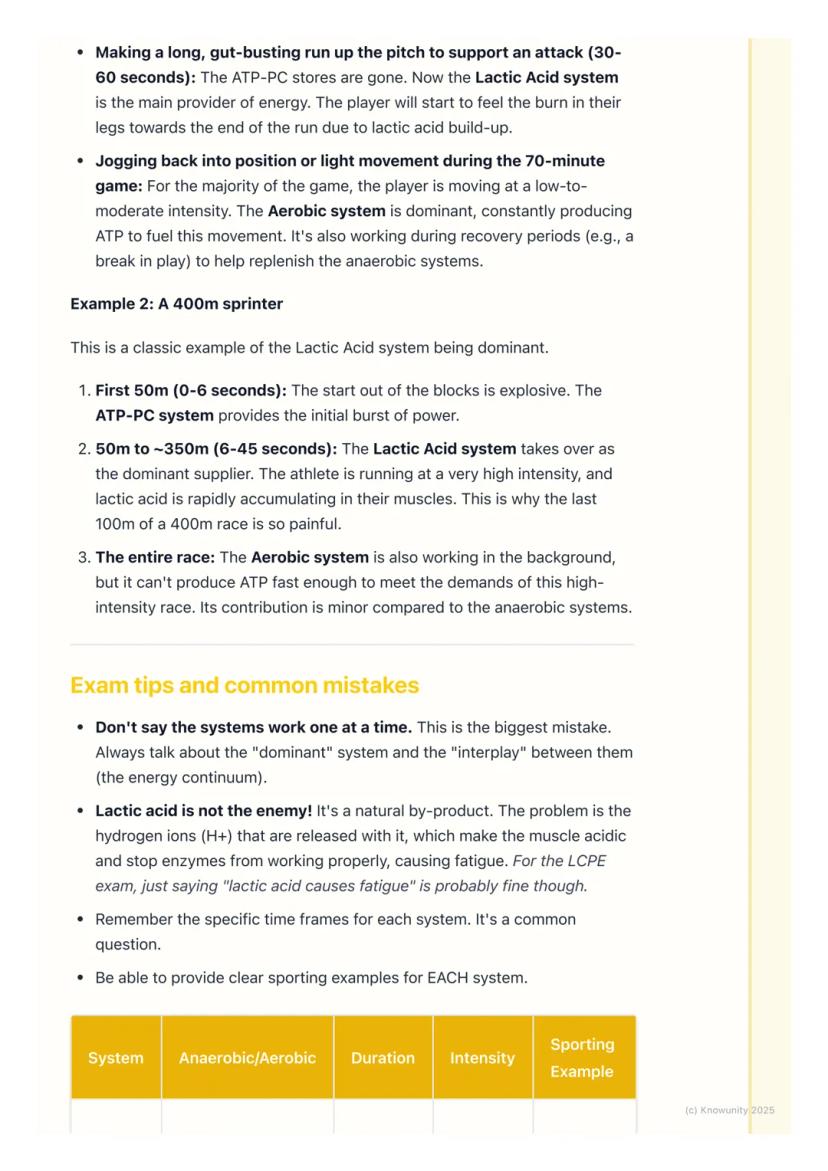
Here's what you absolutely need to know for exams: ATP-PC lasts 8-10 seconds at maximum intensity using PC as fuel. Lactic acid system goes from 10 seconds to 2 minutes at high intensity using glycogen, producing that burning sensation. Aerobic system kicks in properly after 2 minutes, using glycogen and fats with oxygen for sustained activity.
The recovery times are crucial too. ATP-PC stores refill in 2-3 minutes, lactic acid takes 20 minutes to 2 hours to clear, and full glycogen restoration can take up to 48 hours after really long events.
Common exam mistakes include saying systems work separately (they don't), forgetting that all systems contribute simultaneously, and mixing up the time frames. Also remember - it's not actually the lactic acid that causes fatigue, but the hydrogen ions that make muscles acidic.
Pro Tip: Learn one clear sporting example for each system - shot put , 400m sprint (lactic acid), and marathon (aerobic). You'll definitely need these in exams.
5
of 5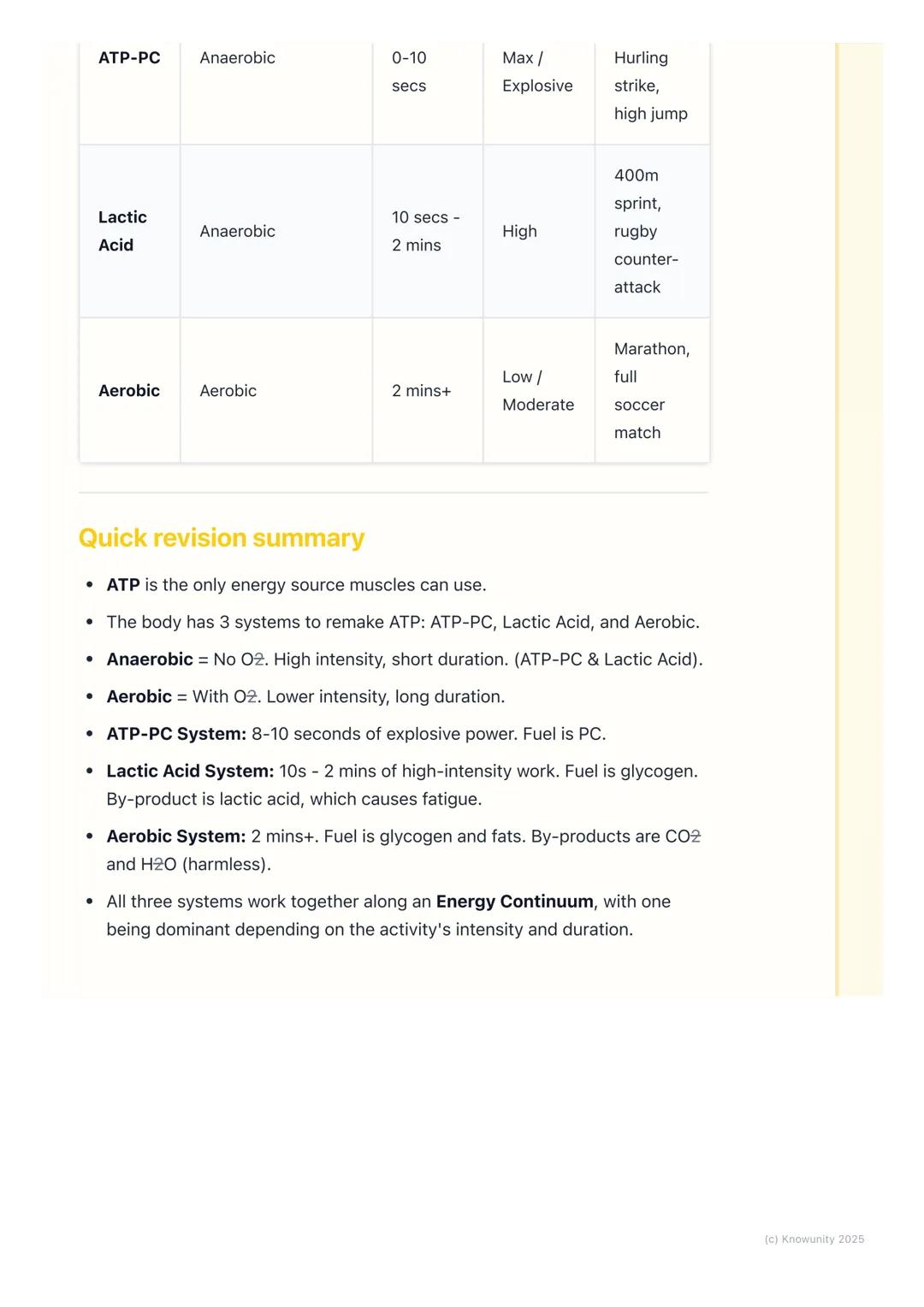
Quick Revision Summary
Your body's energy systems work like a perfectly coordinated team. The ATP-PC system handles explosive movements up to 10 seconds. The lactic acid system powers high-intensity work for 10 seconds to 2 minutes but comes with that burning penalty. The aerobic system is your long-distance champion, efficiently fueling moderate activity for hours.
Remember the energy continuum concept - these systems blend into each other rather than switching on and off. Which system dominates depends entirely on how intense your activity is and how long you're doing it for.
Master the time frames, fuel sources, and sporting examples for each system. Understanding when each system kicks in will help you make sense of training programs, why different sports feel so different, and how to pace yourself in everything from a 100m sprint to a long bike ride.
Final Check: Can you explain why a footballer can jog for 90 minutes but only sprint flat-out for 10 seconds? If yes, you've got this!
Νομίζαμε ότι δε θα ρωτούσες ποτέ...
Τι είναι ο AI σύντροφος του Knowunity;
Ο AI σύντροφός μας είναι ειδικά σχεδιασμένος για τις ανάγκες των μαθητών. Βασισμένοι στα εκατομμύρια κομμάτια Περιεχομένων που έχουμε στην πλατφόρμα, μπορούμε να παρέχουμε πραγματικά ουσιαστικές και σχετικές απαντήσεις στους μαθητές. Αλλά δεν αφορά μόνο τις απαντήσεις, ο σύντροφος είναι ακόμη περισσότερο για την καθοδήγηση των μαθητών στις καθημερινές τους μαθησιακές προκλήσεις, με εξατομικευμένα προγράμματα μελέτης, κουίζ ή Περιεχόμενα στη Συνομιλία και 100% εξατομίκευση βασισμένη στις δεξιότητες και την ανάπτυξη των μαθητών.
Πού μπορώ να κατεβάσω την εφαρμογή Knowunity;
Μπορείτε να κατεβάσετε την εφαρμογή από το Google Play Store και το Apple App Store.
Πώς μπορώ να λάβω την πληρωμή μου; Πόσα μπορώ να κερδίσω;
Ναι, έχετε δωρεάν πρόσβαση στο περιεχόμενο της εφαρμογής και στον AI companion μας. Για να ξεκλειδώσετε ορισμένες λειτουργίες της εφαρμογής, μπορείτε να αγοράσετε το Knowunity Pro.
Πιο δημοφιλή περιεχόμενα στο LCPE
4Πιο δημοφιλή περιεχόμενα
9Δε μπορείς να βρεις αυτό που ψάχνεις; Εξερεύνησε άλλα μαθήματα.
Κριτικές από τους χρήστες μας. Έχουν όλα τα καλά — και το ίδιο θα είχες κι εσύ.
4.6/5App Store
4.7/5Google Play
Η εφαρμογή είναι πολύ εύκολη στη χρήση και καλά σχεδιασμένη. Έχω βρει ό,τι έψαχνα μέχρι τώρα και έχω μάθει πολλά από τις παρουσιάσεις! Σίγουρα θα χρησιμοποιήσω την εφαρμογή για μια εργασία του μαθήματος! Και φυσικά βοηθάει πολύ και ως έμπνευση.
Στέφαν Σχρήστης iOS
Αυτή η εφαρμογή είναι πραγματικά τέλεια. Υπάρχουν τόσες πολλές σημειώσεις μελέτης και βοήθεια [...]. Το μάθημα που με δυσκολεύει είναι τα Γαλλικά, για παράδειγμα, και η εφαρμογή έχει τόσες επιλογές για βοήθεια. Χάρη σε αυτή την εφαρμογή, έχω βελτιώσει τα Γαλλικά μου. Θα την πρότεινα σε οποιονδήποτε.
Σαμάνθα Κλιχχρήστης Android
Ουάου, είμαι πραγματικά εντυπωσιασμένος. Δοκίμασα την εφαρμογή επειδή την είδα διαφημισμένη πολλές φορές και έμεινα άφωνος. Αυτή η εφαρμογή είναι Η ΒΟΗΘΕΙΑ που χρειάζεσαι για το σχολείο και πάνω απ' όλα, προσφέρει τόσα πράγματα, όπως ασκήσεις και φύλλα γεγονότων, που ήταν ΠΟΛΥ χρήσιμα για μένα προσωπικά.
Άνναχρήστης iOS
LCPE6 προβολές·Ενημερώθηκε Jun 8, 2026·5 σελίδεςIntroduction to the Body's Energy Systems
Ever wonder why you can sprint for only a few seconds but jog for ages? Your body has three different energy systems that kick in depending on what you're doing. Understanding these systems will help you make sense of why... Δες περισσότερα
1
of 5Κάνε εγγραφή για να δεις το ΠΕΡΙΕΧΟΜΕΝΟ. Είναι δωρεάν!
- Πρόσβαση σε όλα τα έγγραφα
- Βελτίωσε τους βαθμούς σου
- Γίνε μέλος με εκατομμύρια μαθητές
Basic Energy Systems
Your muscles are basically really picky eaters - they can only use one type of fuel called ATP (Adenosine Triphosphate). Think of ATP as your body's energy currency, like coins in an arcade machine.
Here's the thing though: your body only stores enough ATP for about 2-3 seconds of movement. After that, it needs to quickly make more using three different systems. The cool part is that these systems work together on what's called the energy continuum - it's not like flicking a switch, but more like a sliding scale where one system takes the lead.
The key difference between these systems is whether they need oxygen (aerobic) or can work without oxygen (anaerobic). Anaerobic systems are lightning fast but burn out quickly, whilst aerobic systems are like marathon runners - slower to start but can keep going for hours.
Quick Tip: Remember the equation ATP → ADP + P + Energy. Your body's job is constantly sticking that phosphate back on to remake ATP!
2
of 5Κάνε εγγραφή για να δεις το ΠΕΡΙΕΧΟΜΕΝΟ. Είναι δωρεάν!
- Πρόσβαση σε όλα τα έγγραφα
- Βελτίωσε τους βαθμούς σου
- Γίνε μέλος με εκατομμύρια μαθητές
The Three Energy Systems
The ATP-PC System is your body's emergency energy supply. It's pure explosive power for about 8-10 seconds using phosphocreatine (PC) stored in your muscles. Think 100m sprint start or a rugby tackle - maximum effort, no oxygen needed, no nasty side effects.
The Lactic Acid System takes over when you're still going hard after 10 seconds. It breaks down glycogen (stored carbs) without oxygen, but here's the catch - it produces lactic acid that makes your muscles burn and forces you to slow down after about 2 minutes.
The Aerobic System is your endurance powerhouse. It uses oxygen to efficiently burn glycogen and fats, producing only harmless water and carbon dioxide. This system can literally keep you going for hours, but it can't produce energy fast enough for high-intensity work.
Remember: These systems don't work in isolation - they're all contributing at the same time, with one being dominant depending on what you're doing.
3
of 5Κάνε εγγραφή για να δεις το ΠΕΡΙΕΧΟΜΕΝΟ. Είναι δωρεάν!
- Πρόσβαση σε όλα τα έγγραφα
- Βελτίωσε τους βαθμούς σου
- Γίνε μέλος με εκατομμύρια μαθητές
Real Sport Applications
Let's look at a Gaelic football midfielder during a match. When they sprint for a loose ball , the ATP-PC system dominates, giving that explosive burst. During a gut-busting run up the pitch , the lactic acid system takes over - that's why their legs start burning.
For the rest of the 70-minute match, the aerobic system is doing most of the work during jogging and recovery periods. It's also busy helping to clear lactic acid and restock the anaerobic systems during breaks in play.
A 400m sprinter is the perfect example of lactic acid system dominance. The first 50m uses ATP-PC for that explosive start, then lactic acid takes over for the brutal middle section. By the final 100m, lactic acid buildup is causing that wall of pain every 400m runner knows too well.
Exam Gold: Never say the systems work "one at a time" - always mention the dominant system and how they work together on the energy continuum.
4
of 5Κάνε εγγραφή για να δεις το ΠΕΡΙΕΧΟΜΕΝΟ. Είναι δωρεάν!
- Πρόσβαση σε όλα τα έγγραφα
- Βελτίωσε τους βαθμούς σου
- Γίνε μέλος με εκατομμύρια μαθητές
Key Details and Exam Tips
Here's what you absolutely need to know for exams: ATP-PC lasts 8-10 seconds at maximum intensity using PC as fuel. Lactic acid system goes from 10 seconds to 2 minutes at high intensity using glycogen, producing that burning sensation. Aerobic system kicks in properly after 2 minutes, using glycogen and fats with oxygen for sustained activity.
The recovery times are crucial too. ATP-PC stores refill in 2-3 minutes, lactic acid takes 20 minutes to 2 hours to clear, and full glycogen restoration can take up to 48 hours after really long events.
Common exam mistakes include saying systems work separately (they don't), forgetting that all systems contribute simultaneously, and mixing up the time frames. Also remember - it's not actually the lactic acid that causes fatigue, but the hydrogen ions that make muscles acidic.
Pro Tip: Learn one clear sporting example for each system - shot put , 400m sprint (lactic acid), and marathon (aerobic). You'll definitely need these in exams.
5
of 5Κάνε εγγραφή για να δεις το ΠΕΡΙΕΧΟΜΕΝΟ. Είναι δωρεάν!
- Πρόσβαση σε όλα τα έγγραφα
- Βελτίωσε τους βαθμούς σου
- Γίνε μέλος με εκατομμύρια μαθητές
Quick Revision Summary
Your body's energy systems work like a perfectly coordinated team. The ATP-PC system handles explosive movements up to 10 seconds. The lactic acid system powers high-intensity work for 10 seconds to 2 minutes but comes with that burning penalty. The aerobic system is your long-distance champion, efficiently fueling moderate activity for hours.
Remember the energy continuum concept - these systems blend into each other rather than switching on and off. Which system dominates depends entirely on how intense your activity is and how long you're doing it for.
Master the time frames, fuel sources, and sporting examples for each system. Understanding when each system kicks in will help you make sense of training programs, why different sports feel so different, and how to pace yourself in everything from a 100m sprint to a long bike ride.
Final Check: Can you explain why a footballer can jog for 90 minutes but only sprint flat-out for 10 seconds? If yes, you've got this!
Νομίζαμε ότι δε θα ρωτούσες ποτέ...
Τι είναι ο AI σύντροφος του Knowunity;
Ο AI σύντροφός μας είναι ειδικά σχεδιασμένος για τις ανάγκες των μαθητών. Βασισμένοι στα εκατομμύρια κομμάτια Περιεχομένων που έχουμε στην πλατφόρμα, μπορούμε να παρέχουμε πραγματικά ουσιαστικές και σχετικές απαντήσεις στους μαθητές. Αλλά δεν αφορά μόνο τις απαντήσεις, ο σύντροφος είναι ακόμη περισσότερο για την καθοδήγηση των μαθητών στις καθημερινές τους μαθησιακές προκλήσεις, με εξατομικευμένα προγράμματα μελέτης, κουίζ ή Περιεχόμενα στη Συνομιλία και 100% εξατομίκευση βασισμένη στις δεξιότητες και την ανάπτυξη των μαθητών.
Πού μπορώ να κατεβάσω την εφαρμογή Knowunity;
Μπορείτε να κατεβάσετε την εφαρμογή από το Google Play Store και το Apple App Store.
Πώς μπορώ να λάβω την πληρωμή μου; Πόσα μπορώ να κερδίσω;
Ναι, έχετε δωρεάν πρόσβαση στο περιεχόμενο της εφαρμογής και στον AI companion μας. Για να ξεκλειδώσετε ορισμένες λειτουργίες της εφαρμογής, μπορείτε να αγοράσετε το Knowunity Pro.
Πιο δημοφιλή περιεχόμενα στο LCPE
4Πιο δημοφιλή περιεχόμενα
9Δε μπορείς να βρεις αυτό που ψάχνεις; Εξερεύνησε άλλα μαθήματα.
Κριτικές από τους χρήστες μας. Έχουν όλα τα καλά — και το ίδιο θα είχες κι εσύ.
4.6/5App Store
4.7/5Google Play
Η εφαρμογή είναι πολύ εύκολη στη χρήση και καλά σχεδιασμένη. Έχω βρει ό,τι έψαχνα μέχρι τώρα και έχω μάθει πολλά από τις παρουσιάσεις! Σίγουρα θα χρησιμοποιήσω την εφαρμογή για μια εργασία του μαθήματος! Και φυσικά βοηθάει πολύ και ως έμπνευση.
Στέφαν Σχρήστης iOS
Αυτή η εφαρμογή είναι πραγματικά τέλεια. Υπάρχουν τόσες πολλές σημειώσεις μελέτης και βοήθεια [...]. Το μάθημα που με δυσκολεύει είναι τα Γαλλικά, για παράδειγμα, και η εφαρμογή έχει τόσες επιλογές για βοήθεια. Χάρη σε αυτή την εφαρμογή, έχω βελτιώσει τα Γαλλικά μου. Θα την πρότεινα σε οποιονδήποτε.
Σαμάνθα Κλιχχρήστης Android
Ουάου, είμαι πραγματικά εντυπωσιασμένος. Δοκίμασα την εφαρμογή επειδή την είδα διαφημισμένη πολλές φορές και έμεινα άφωνος. Αυτή η εφαρμογή είναι Η ΒΟΗΘΕΙΑ που χρειάζεσαι για το σχολείο και πάνω απ' όλα, προσφέρει τόσα πράγματα, όπως ασκήσεις και φύλλα γεγονότων, που ήταν ΠΟΛΥ χρήσιμα για μένα προσωπικά.
Άνναχρήστης iOS